
In the digital market of 2026, online stores fight hard for attention. The real question is not “Do we need to be online?” but “Which channels bring steady growth that lasts?”
One of the clearest answers is organic search. It still matters because it matches how people actually shop online: they search, compare, read, and then buy based on real intent.
For online retailers that want steady growth and repeat customers, learning how organic search works is a basic requirement. If you run a Shopify store, getting help from Shopify SEO experts can make a big difference, because they can help set up your store to capture this traffic properly.
The scale is huge: around 68% of all online experiences start with a search engine. That number says a lot about how people behave online.
Shoppers use search engines when they have a need, a question, or a problem to solve. That makes organic search the main entry point to people who are already interested.
What Is Organic Search and How Does It Drive Growth for Online Retailers?
Organic search means the results you see on Google (and other search engines) that appear because the search engine decided they are the best match. These “natural” results show up based on relevance, credibility, and content quality.
Since these results are earned, many users trust them more, which is one reason organic search is such a strong growth channel for online stores.
For an online retailer, organic search traffic means people come to your site because your page answered what they searched for.
You are not paying per click or bidding in an auction. Instead, you earn visibility by improving your site and offering useful information.
This matters because it affects how good your traffic is, how much it costs to win customers, and how steady your growth can be over time.
How Do Search Engines Determine Organic Rankings?
Search engines rank organic results through three main steps: crawling, indexing, and ranking.
First, crawlers scan the web to find pages and updates. They follow links, read sitemaps, and map out how sites connect to each other.
Next comes indexing. The search engine processes what each page is about and stores that information in large databases. It looks at the content, but also how the page works for users and how it fits into the wider web.
The final step is ranking: when someone searches, the algorithm checks the index and orders results it believes are the best match. This decision is based on many signals, which change over time as Google updates its systems. Common factors include keyword relevance, backlinks, site speed, mobile usability, and user experience.

Why Is Organic Search a Key Channel for Online Retailers?
Online retail is highly competitive, and every visit and sale matters. With constant pressure to get new customers, organic search stands out as a key channel that supports long-term business growth.
Its value is not just “more traffic.” It helps build trust, improves brand awareness, and supports sales over time.
1. Sustainable, Scalable Customer Acquisition
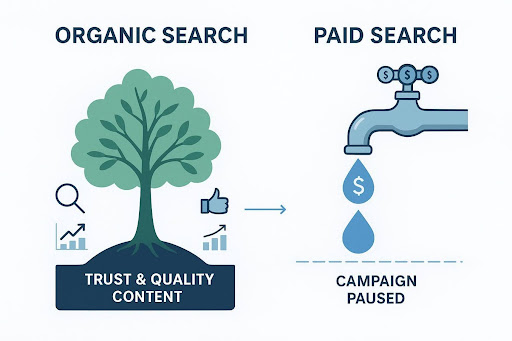
Organic search is strong because it can keep bringing customers without paying for every click. With paid ads, results often stop as soon as you stop spending. With SEO, a good page can bring traffic for months or even years.
Over time, this creates a “flywheel” effect: helpful content ranks better, rankings bring clicks, and those clicks can help your site gain more authority, which supports future rankings.
This also helps you scale. When you add products or move into new categories, an established site often ranks faster because it already has trust.
You’re building an asset that gains value, instead of running one-off campaigns. This long-term approach is especially important for retailers that want to grow year after year.

2. Cost-Effectiveness Compared to Paid Advertising
Organic search is not free. You still spend money and time on content, technical fixes, and ongoing work. But it often becomes cheaper over time than paying for every visit through ads.
Average Google Ads cost per click has increased, which makes paid growth harder to sustain. To offset rising costs, some retailers now use ChatGPT for Google Ads to refine targeting and messaging before committing budget to paid campaigns. Organic traffic, once earned, can keep coming without direct per-click fees.
Search Engine Journal reports that 49% of marketers see organic search as the channel with the best ROI. One reason is compounding returns: a strong page can keep performing long after you publish or improve it.
Paid ads are more transactional: you pay, you get traffic, you stop, and the traffic ends. For retailers thinking long-term, organic search is often a smarter financial move.
3. Higher Quality Traffic and Intent
Organic search often brings higher-quality visitors. People who come from search usually looked for something specific and chose your result because it seemed relevant.
They are not just scrolling past an ad. They are actively trying to solve a problem, learn something, or buy something.
Search queries often show intent clearly: informational, navigational, or transactional. When you create content for each intent type, you can support shoppers from early research to final purchase.
Long-tail searches with buying intent (very specific product searches) often come from people who are close to purchasing. This usually leads to better engagement, lower bounce rates, and higher conversion rates compared to many other channels.
4. Organic Search as a Brand Authority Builder
Ranking well in organic results does more than bring clicks. It helps people see your brand as a trusted name. If your store shows up again and again for key searches, users start to remember you and assume you know what you’re talking about.
Many shoppers are cautious about paid promotions, but organic rankings can feel more credible.
Google also pushes E-E-A-T (Experience, Expertise, Authoritativeness, Trustworthiness). For ecommerce, that means showing real product use, giving detailed product information, offering expert guidance, and building trust with real reviews.
Authority built through SEO is often more stable than attention created only through ads, because it’s supported by useful content and trust signals.
5. Impact on Customer Retention and Loyalty
Organic search can also support retention and loyalty. When users visit your site and have a good experience, they may start seeing your pages more often in future searches related to your products. This keeps your brand in their view over time, and each visit is another chance to build loyalty.
Helpful content also builds stronger relationships. If customers feel your brand helps them they are more likely to come back and buy again. They may also recommend you to others.
Over time, it creates stronger brand reputation and a more loyal customer base.
6. Organic Search’s Role in Long-Term Ecommerce Growth
Organic search is not just another marketing checkbox. It supports long-term ecommerce growth by bringing steady high-intent traffic, building trust, and reducing reliance on costly paid channels.
Quick wins can be tempting, but steady growth usually comes from building a strong brand presence, not from short bursts of ads.
Algorithms and consumer habits will keep changing. A strong organic strategy helps you stay visible and relevant even when ad costs rise or platform rules change.
By investing in organic search, retailers build a compounding asset that supports other marketing channels, increases revenue over time, grows market share, and strengthens their position in online retail.
Conclusion
In 2026, search results are changing quickly, but organic search still holds a strong place for online retailers. The way results appear may look different, yet the basic user behavior remains the same: people still want real answers and unbiased information.
That’s why organic search continues to connect real demand with the products and brands that can meet it.
The path forward is not to drop SEO, but to raise the standard. Retailers need to go beyond basic keyword work and build a strong online presence based on real expertise and a smooth user experience.
The brands that perform best will treat their websites as more than a store. They will build helpful resources, share unique insights, prove product value in real situations, and build trust at every step.
Over time, organic growth comes from creating a brand that is useful, credible, and visible across the internet, leading to steady sales, repeat customers, and a stronger long-term position in the market.

Raghav Sharma is a content writer and media researcher at Newsdata.io, specializing in news industry analysis, media literacy, and the evolving landscape of digital journalism. With a background in English Literature and Journalism, along with a focus on fact-based reporting standards, Raghav covers topics including news API technology, editorial bias evaluation, and responsible information consumption. Raghav’s work has covered media trends across categories, including healthcare news, international journalism, and API-driven publishing. You can connect with him on LinkedIn or explore more of his writing on the Newsdata.io blog.