
Not long ago, the conversation around generative video was dominated by novelty. Early experiments yielded dreamlike, surreal sequences where objects morphed unpredictably and physical logic was routinely ignored. While technically impressive for its time, this chaotic style of synthesis held limited practical value for commercial or professional video production.
Today, we are witnessing a quiet but significant shift. The industry is moving away from purely random, generative experiments and toward a more controlled, deterministic model of video creation. Creators and developers are no longer asking what the technology can generate at random; they are asking how it can consistently produce assets that match a specific creative vision.
The Paradigm Shift: Moving Beyond the Uncanny Valley
In any creative industry, unpredictability is the enemy of scale. When editors and directors set out to create a video, they operate within strict style guides, brand colors, and narrative arcs. If a tool cannot reliably replicate these elements across multiple scenes, it remains a novelty rather than a utility.
A research report by McKinsey & Company on the economic potential of generative AI highlights that the technology could add trillions of dollars in value to the global economy. The report specifically points out that marketing and content communication are among the primary sectors poised to benefit from these productivity gains. However, unlocking this value depends heavily on control.
To transition from experimental software to reliable industry tools, generative video platforms have had to focus on cohesion—the ability to maintain visual, thematic, and structural continuity throughout a project.
Core Trend 1: Transitioning from Generative Chaos to Semantic Control
The earliest generative models operated primarily on basic text prompts. The user would type a description, and the model would generate an approximation. The issue was a lack of precision; changing a single word in a prompt often resulted in an entirely different art style, camera angle, or character design.
Traditional video production requires hours of manual sourcing, licensing, and editing to ensure that all assets match a single script. Modern platforms are addressing this friction by introducing semantic control layers. Instead of relying solely on raw text prompts, tools now allow users to lock in specific parameters, such as camera movements, lighting styles, and art directions.
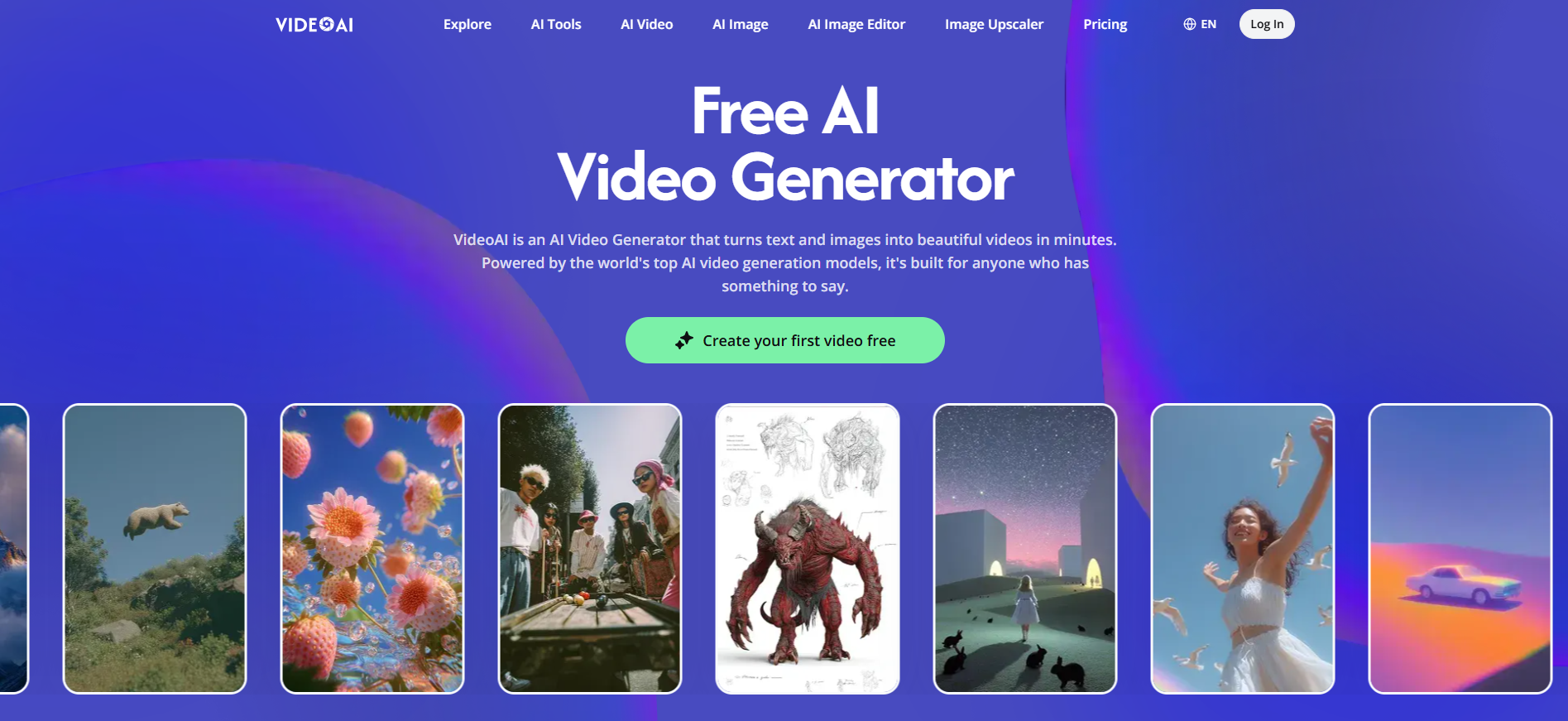
This is where platforms like VideoAI are finding their footing. By focusing on user-friendly interfaces that simplify complex rendering parameters, they help creators bridge the gap between creative intent and visual output. Transitioning from a speculative concept to a structured draft becomes a matter of setting clear parameters rather than rolling the dice. Utilizing a modern AI Video Generator in this manner allows writers and designers to see their ideas visualized with a level of structural consistency that was previously difficult to achieve without a dedicated post-production team.
Core Trend 2: Solving the Continuity Problem in Asset Generation
One of the biggest hurdles in video synthesis has been character and style drift. If a character has a blue jacket in scene one, they must have the same blue jacket in scene three. In early video generation models, maintaining this basic consistency was nearly impossible without intensive manual frame-by-frame editing.
Preserving Character Identity Across Scenes
To solve the issue of character drift, modern developers are building identity preservation systems. These systems analyze a reference image of a character or object and project those exact physical traits across subsequent generations. This allows a creator to place the same character in different settings—such as a bustling city street, an office, or a quiet park—while preserving their facial structure, clothing, and overall silhouette.
Establishing Color and Tone Consistency
Beyond individual characters, a video must feel unified in its color palette and emotional tone. Newer AI video tools allow creators to upload a mood board or a specific color reference to guide the generation process. This ensures that every generated asset fits naturally into the final timeline without requiring extensive color correction during post-production.
Core Trend 3: The Shift from Text Prompts to Multi-Modal Inputs
Relying entirely on text to describe complex visual sequences is inherently limiting. Language is subjective; what one person visualizes as a professional corporate office might look entirely different to an automated rendering engine. To achieve true precision, the industry has embraced multi-modal inputs.
Instead of starting with an empty text box, creators increasingly guide the production process using multiple data points:
- Image References: Providing an initial frame to establish the exact composition, lighting, and art style.
- Motion Paths: Indicating which direction a camera should pan or how an object should move across the screen.
- Audio Triggers: Syncing visual pacing and motion cuts directly to the beat or cadence of an underlying audio track.
Because the modern AI Video Generator has evolved past simple text prompts, incorporating visual and spatial guides, creators can guide the software with far more nuance. This multi-modal approach ensures that the output aligns more closely with traditional storyboarding techniques, making the entire process feel more familiar to seasoned video editors.
The Realistic Future: A Collaborative, Hybrid Pipeline
Despite these steady technological advancements, it is crucial to maintain a grounded view of what these tools can achieve. Fully automated, single-button video generation is not the immediate future of high-quality filmmaking or serious content creation. Instead, the real value lies in the hybrid pipeline.
In a hybrid workflow, automated systems handle the heavy lifting of drafts, rapid prototyping, and basic B-roll generation. Meanwhile, human designers focus on the emotional nuance, precise pacing, sound design, and brand alignment that connect with an audience.
Integrating a modern AI Video Generator into an existing setup is less about replacing editors and more about scaling the draft phase. It allows a production team to rapidly mock up ideas, present concrete concepts to clients, and produce supporting assets without exhausting their budget. The final layers of emotional nuance and brand alignment still require a human editor’s eye.
At this stage of development, these systems are best viewed as highly capable creative assistants. They do not replace the filmmaker; rather, they remove the mechanical friction that often gets in the way of a filmmaker’s vision.
A Pragmatic Step Forward for Digital Media
The evolution of generative video is a journey from chaotic novelty to structured utility. As AI platforms continue to refine their control systems, the barrier to entry for producing polished, cohesive visual narratives will continue to fall.
For brands, independent creators, and agencies, the goal is not to automate away the human element of storytelling. Instead, it is about leveraging these advancements to build more efficient, resilient creative pipelines—allowing human storytellers to spend less time managing technical bottlenecks and more time focusing on the core ideas that resonate with audiences.

Raghav Sharma is a content writer and media researcher at Newsdata.io, specializing in news industry analysis, media literacy, and the evolving landscape of digital journalism. With a background in English Literature and Journalism, along with a focus on fact-based reporting standards, Raghav covers topics including news API technology, editorial bias evaluation, and responsible information consumption. Raghav’s work has covered media trends across categories, including healthcare news, international journalism, and API-driven publishing. You can connect with him on LinkedIn or explore more of his writing on the Newsdata.io blog.