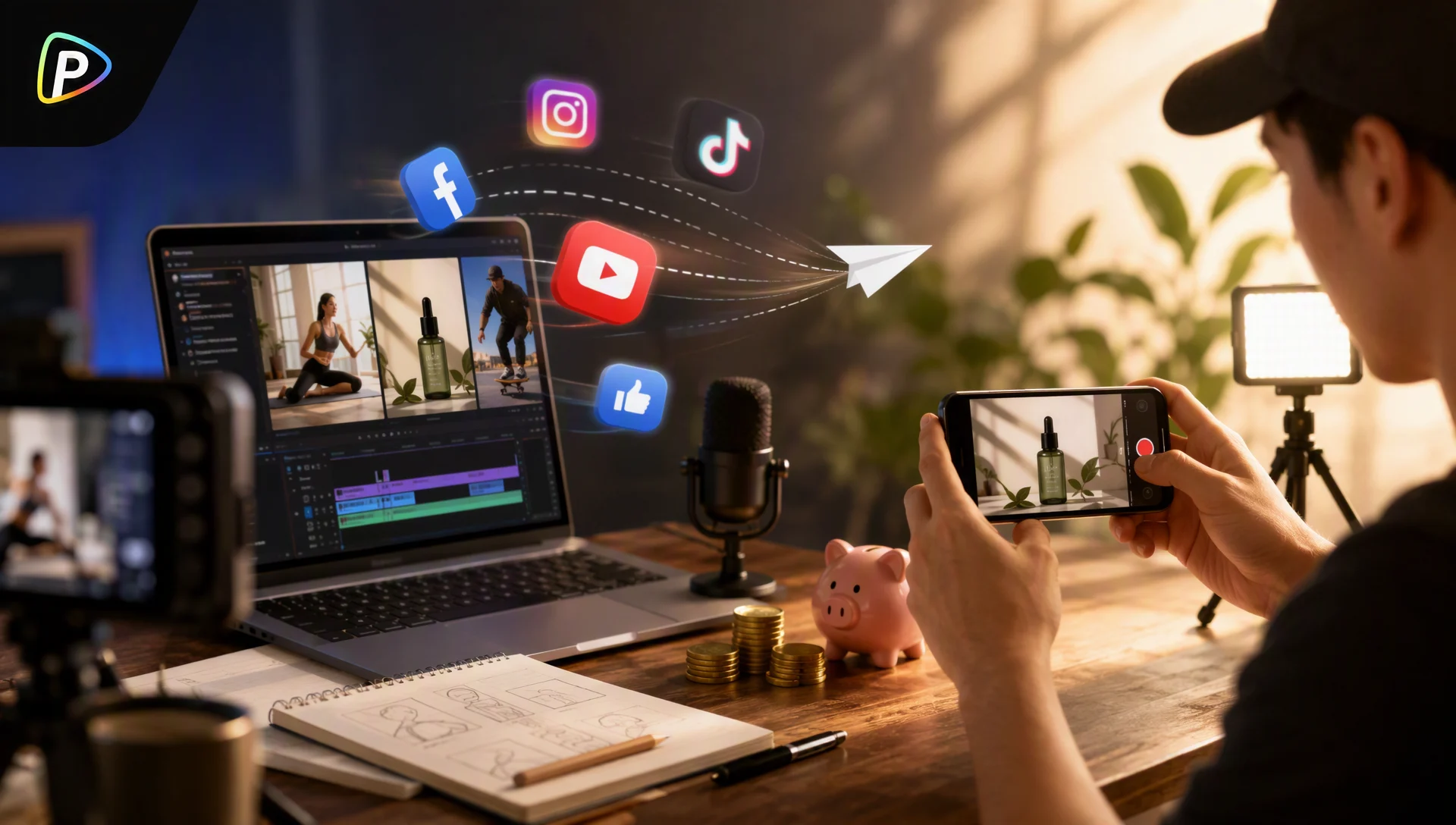

Most marketing teams already have plenty of video. The problem is getting more ideas out of it without simply making the same ad again.
An existing product demo, for example, may have a great camera move but the wrong setting for a new campaign. Seedance 2.0 on Pollo AI can use that footage as a reference and rebuild the concept around it, using video, images, audio, and text to guide the result. This makes it useful for testing new creative directions from ads that already exist.
Why Try Seedance 2.0 on Pollo AI?

Seedance 2.0 is built for reference-heavy video generation, but the Pollo AI workflow makes that particularly practical for marketers. Instead of working with the model in isolation, users can select Seedance 2.0 on Pollo AI, upload their existing footage and product references, and generate new versions within the same creative workflow.
The useful part is not simply generating another video. A reference clip can provide the camera movement, transitions, or visual rhythm, while the prompt changes the actual marketing idea. Seedance 2.0 also supports video extension, which can be useful when an existing opening or ending is worth keeping.
There are limits, though. Reference-based generation does not guarantee pixel-perfect reproduction, especially with small product details, text, or complicated scenes. The workflow is better for creative exploration than automatic ad production.
How to Turn an Existing Ad into a New Concept

1. Choose the Right Part of the Existing Ad
Open Seedance 2.0 on Pollo AI and upload the ad you want to reuse.
Do not automatically use the entire commercial. A 5–10 second section with one clear camera move or product shot is often a better reference than a busy ad with multiple cuts.
The first question should be simple: What is worth keeping? It could be the product reveal, camera movement, pacing, or composition.
2. Add a Clean Product Reference
If the product needs to stay recognizable, add a clear product image alongside the video reference.
This matters for packaging, logos, clothing, and other details where a slightly different shape can make the new ad look fake. Seedance 2.0 supports multiple reference types and is designed to maintain visual details across generated content.
A common mistake is using a blurry product shot and then trying to fix the result with a longer prompt. Better source material usually helps more than extra instructions.
3. Separate What Stays From What Changes
The prompt should make the job clear.
For example:
Use the reference video for the slow camera movement and product reveal. Keep the premium pacing, but change the setting to a bright morning bathroom and show the product as part of a daily skincare routine. Keep the packaging consistent with the reference image.
This is more useful than saying “make a new version.” The video tells Seedance 2.0 what visual language to borrow; the text explains what the new concept should be.
4. Generate, Then Fix One Problem at a Time
Generate the first version through Pollo AI and treat it as a test.
If the camera movement works but the product looks wrong, improve the product reference. If the product is fine but the scene feels too busy, simplify the prompt. Changing five things at once makes it hard to know what actually improved the result.
Fast cuts, multiple products, and lots of on-screen text can also confuse a reference-based generation. When possible, start with a clean shot and build from there.
5. Create Variations Instead of Remakes
Once the basic idea works, change one variable at a time.
The same product reveal could become a lifestyle ad, a problem-solution concept, or a short social hook. The camera language can stay similar while the setting, audience, or use case changes.
Seedance 2.0 can also extend existing footage, so a marketer can experiment with a different opening or ending rather than rebuilding the whole sequence.
What Can Go Wrong?
The biggest issue is expecting the model to preserve everything from the original ad. It will not always do that. Small packaging text, logos, hands, and complex product interactions are worth checking frame by frame.
Another problem is overloading the prompt. If the goal is to keep the original camera movement, change the setting, introduce a new character, alter the lighting, and add a new storyline all at once, the output can become inconsistent.
There is also a practical distinction between a creative variation and a finished ad. Generated footage may still need editing, brand review, accurate product claims, captions, and final formatting before it is ready for a campaign.
Final Thoughts
The interesting use case for Seedance 2.0 on Pollo AI is not replacing an old ad with an AI-generated copy. It is taking something that already works and asking, what else could this become?
A proven camera move can support a new product story. An existing product shot can become the starting point for a different audience. One ad can turn into several creative directions without rebuilding every idea from scratch.
That makes the workflow most useful for marketers who already have footage and need more concepts to test—not for teams expecting one-click, production-ready ads.

Raghav Sharma is a content writer and media researcher at Newsdata.io, specializing in news industry analysis, media literacy, and the evolving landscape of digital journalism. With a background in English Literature and Journalism, along with a focus on fact-based reporting standards, Raghav covers topics including news API technology, editorial bias evaluation, and responsible information consumption. Raghav’s work has covered media trends across categories, including healthcare news, international journalism, and API-driven publishing. You can connect with him on LinkedIn or explore more of his writing on the Newsdata.io blog.