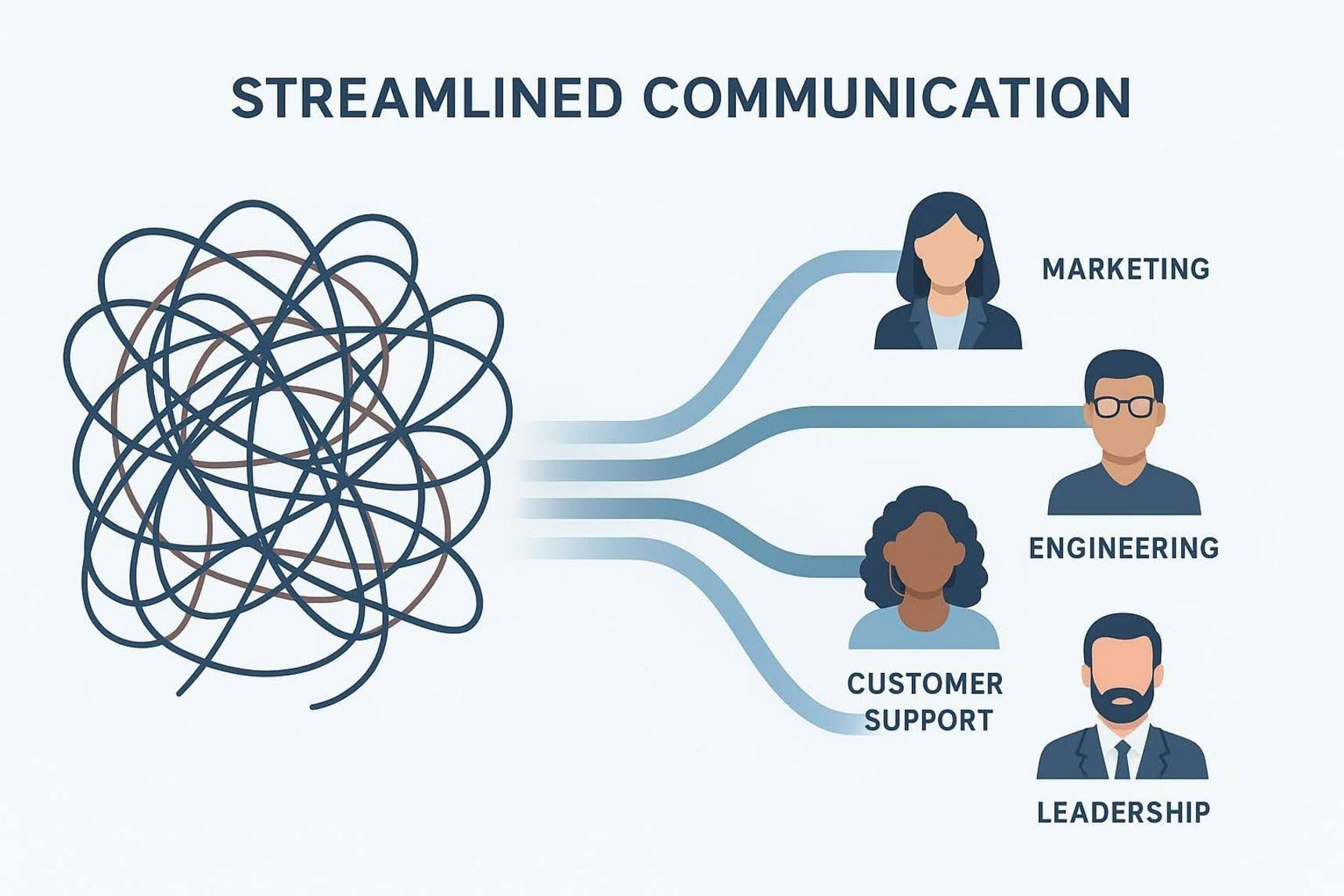

In today’s fast-moving work setting, teams often work across departments, locations, and time zones. The issue is not whether people are communicating, but whether that communication is working well.
To streamline employee communication across teams means setting up a clear, consistent, two-way flow of information, using the right tools, and setting strong rules that reduce noise and avoid expensive mistakes.
Platforms like Look Digital Signage enable organizations to centrally manage and deliver real-time updates, policy changes, or internal messages across digital screens, ensuring important information reaches everyone without delays or mixed messages.
What Are the Benefits of Streamlining Communication Between Teams?
Streamlining communication between teams is not just about fixing what is broken. It also creates a chain of positive results that improves company health and performance.
The benefits include better use of time and resources, easier access to information, happier employees, and faster growth. When communication is clear and efficient, the whole organization works better.
Most employees want to feel useful and believe their work matters. Weak communication can slow down a company and make work feel pointless.
Streamlining fixes this by removing pain points. Implementing visual communication hubs via https://www.lookdigitalsignage.com/ or simple, personalized recognition messages can also lift morale and strengthen loyalty.
A clear and responsive environment builds trust, keeps people aligned, and reduces the chances of missing key details. It also supports psychological safety, where people feel comfortable sharing ideas and giving helpful feedback, which improves team relationships.
Which Tools and Technologies Help Streamline Communication?
In modern workplaces, technology is a key part of streamlining cross-team communication. The right tools support better connection, faster updates, and smoother collaboration.
When choosing tools, focus on ease of use, access for all employees, security, and what employees will actually use.
Business owners often browse options from Gamma Group to learn how unified communication platforms can seamlessly bridge the gap between disparate remote teams. By evaluating these intuitive, cloud-based tools, leadership can implement secure messaging and voice solutions that actively boost daily employee engagement and collaboration.
Choosing the Right Collaboration Platforms
There are many collaboration tools built on secure messaging infrastructure that support real-time chat, file sharing, and task coordination, helping teams stay aligned even when they are not in the same place.
The right collaboration software can reduce bottlenecks and raise performance by 20-30%. A typical internal communication toolkit may include:
- Slack or Microsoft Teams for quick updates and short discussions
- An intranet for company news, policies, and department resources
- Dropbox or Google Drive for secure file sharing and shared editing
- Notion or Asana for tasks, deadlines, and project tracking
- Loom for video updates that cut down on meetings
- Donut for Slack for casual meetups and mentoring connections
- Udext for texting deskless and remote workers, with two-way messaging, personalized mass texts, and SMS surveys (no app needed)
- Vibe Board S1 for visual collaboration with an infinite canvas and 250+ app integrations

Project Management and Information Sharing Tools
Project management and information sharing tools support clear cross-team communication. Many companies use Project Portfolio Management (PPM) platforms that include strong communication features to improve how information moves. Organizations managing larger, more complex project loads often turn to enterprise project portfolio management to align cross-team initiatives with strategic priorities.
Tools like ContactsFlow help teams manage and organize their contact data efficiently by keeping customer and business connections centralized, synchronized, and accessible across devices. With features designed for seamless contact sharing and collaboration, teams can easily share iPhone contacts with a team, ensuring everyone has access to the latest contact information while improving communication and productivity.
Central knowledge bases with real time project data create one “source of truth,” reducing silos and keeping teams on the same page. For developers building workflows around virtual meetings, a Microsoft Teams API get transcript solution can also make meeting conversations available for transcription and integration into internal tools, helping important information from calls become part of the wider project knowledge base. Dashboards show task owners, deadlines, and dependencies so everyone can see project health quickly.
Consistent file names and folder structures also help people find the right document fast and avoid using old versions.
Video, Messaging, and Asynchronous Communication Options
Most workplaces need a mix of live and non-live communication, and choosing the right method makes a big difference. Video calls (Zoom, Microsoft Teams) add face-to-face connection and help with complex discussions. But asynchronous updates (recorded videos, written updates) are great for weekly check-ins because they do not interrupt deep work.
Short videos can also share culture, leadership messages, or product info quickly. Polls and quizzes make people participate instead of just reading.
For urgent updates, SMS is one of the fastest channels: 98% of texts are read within three minutes, so employees see them quickly even without internet access.
Clear rules help, such as:
| Type of message | Best channel |
| Quick question, fast coordination | Chat (Slack/Teams) |
| Formal update, detailed instructions, reference later | |
| Complex discussion, brainstorming, sensitive topics | Video call |
| Tasks, deadlines, progress updates | Project management tool |
| Urgent, time-sensitive alerts | SMS |
Integration With HR and Workflow Systems
Communication tools work best when they connect well with HR and workflow systems. Many PPM and project tools are built to connect with other platforms so work stays aligned without adding extra steps.
For example, linking PPM, timesheet data, and employee attendance tracking with WorkTime with other systems can reduce manual entry and remove silos, so teams share the same accurate information.
Connecting SMS tools to HR or payroll systems can also keep contact lists updated automatically, so new hires and departures are reflected right away. Many HR teams solve this earlier in the process by using Pinpoint applicant tracking system to push verified candidate details straight into payroll and HR platforms the moment someone is hired. Automated reminders tied to these systems can show due dates, changes, or mentions without manual follow-up. With this setup, communication is part of daily work, not a separate activity.
What Are the Best Practices for Streamlined Team Communication?
Streamlining communication is not only about tools. It also depends on a culture that supports clear, open, consistent communication. These practices help create that kind of workplace.
1. Promote a Clear and Transparent Communication Culture
Streamlined communication starts with clarity and openness at every level. Encourage people to write and speak plainly, and avoid jargon and unclear language.
Leaders should set the tone by sharing the context behind decisions, which builds trust and helps employees see how their work connects to company goals.
When assigning tasks, explain why the work matters and where it fits. Even being honest that something “just needs to be done” can build trust.
Managers can support psychological safety by asking questions when something is unclear, admitting mistakes or unknowns, and making sure different voices are heard in meetings. This helps employees feel safe sharing ideas and concerns.
2. Encourage Two-Way Feedback and Open Dialogue
Good communication goes both ways. Companies should build habits that support open dialogue between leaders and employees. Regular feedback helps employees understand expectations and helps leaders see what needs improvement. Feedback should be constructive, specific, and focused on observable facts, not personal attacks.
Employees should also get a chance to respond so feedback becomes a shared problem-solving discussion. Managers should ask for feedback on their own work, make space for others to speak in meetings, and listen carefully.
3. Foster Cross-Departmental Relationships
Departments should not work in isolation. Regular communication across departments improves accountability and reduces missed handoffs.
Encourage teams to share goals, expectations, dependencies, and milestones. Ways to support cross-team relationships include:
- Company events and team activities that support informal connections
- Live cross-department meetings for updates and idea sharing
- Newsletters or written updates to share best practices and wins
- Cross-department training on problem-solving and conflict resolution
Leaders should also support communication that flows down, across, and up the organization. Personal connections help people communicate more honestly and reduce silos.
4. Prevent Information Silos
Information silos trap useful knowledge inside one team and make collaboration harder. To prevent silos, help employees learn about other departments and their challenges. You can do this with presentations, buddy systems, shadowing, onboarding exposure to other units, and cross-functional project teams.
A central knowledge base with real-time project data also supports one reliable source of truth. Connecting communication tools with HR, payroll, and project systems helps automate data flow and keeps information accurate across teams. Breaking down silos helps everyone stay informed and work together more easily.

How to Measure the Success of Streamlined Communication Strategies
Streamlined communication takes time and resources, so it should be measured and improved over time. Measuring success should include both data and employee feedback.
Track Engagement, Response Times, and Team Outcomes
To measure results, track engagement, response times, and team outcomes. Watch delivery rates, open rates, click-through rates, and login rates for intranets or internal apps. These show whether messages are reaching people, being read, and leading to action.
Audience segmentation helps you see how different groups engage, so you can adjust messages for specific teams. Tracking read rates and response times helps identify what content works and where delays happen.
With this data, you can adjust timing, channels, and message formats based on what actually performs well.
Monitor Employee Satisfaction and Retention
A key sign of better communication is improved employee satisfaction and retention. Poor communication lowers engagement and can lead to more people leaving. Strong communication habits are linked to lower turnover.
Track satisfaction with anonymous surveys, pulse surveys, and one-to-one check-ins where employees can speak openly. Review qualitative feedback along with engagement metrics to see where communication helps or hurts the employee experience.
By collecting feedback, reviewing it, and acting on it, organizations can keep communication efficient while still keeping it human and supportive.

Raghav Sharma is a content writer and media researcher at Newsdata.io, specializing in news industry analysis, media literacy, and the evolving landscape of digital journalism. With a background in English Literature and Journalism, along with a focus on fact-based reporting standards, Raghav covers topics including news API technology, editorial bias evaluation, and responsible information consumption. Raghav’s work has covered media trends across categories, including healthcare news, international journalism, and API-driven publishing. You can connect with him on LinkedIn or explore more of his writing on the Newsdata.io blog.