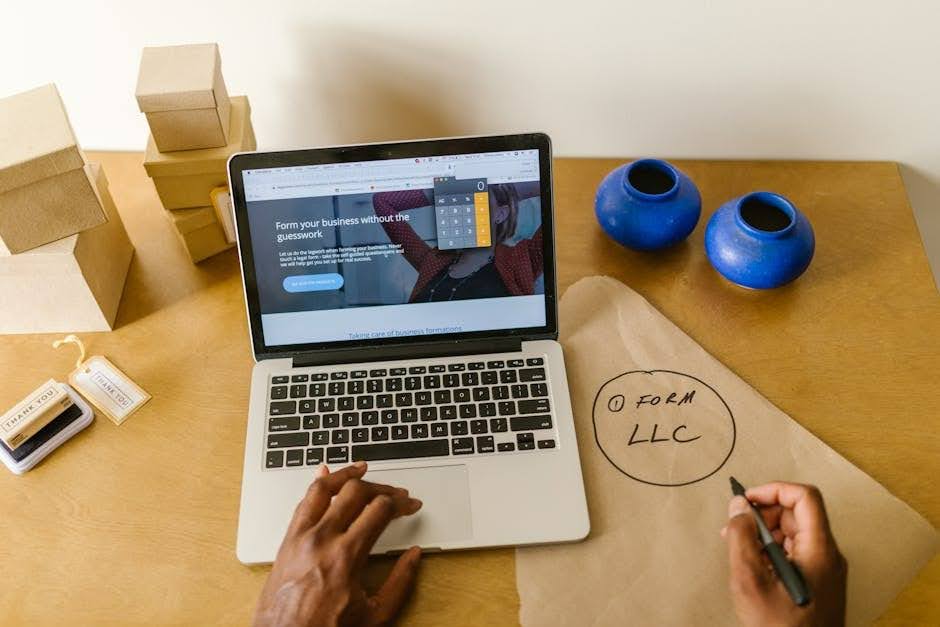

The right website builder for a small business in 2026 is the one that solves the buyer’s actual job, not the one with the cleanest AI demo. A service business, an e-commerce store, and a WordPress-first owner all have different requirements. The first prizes booking and content tools, the second prizes payment processing and inventory, the third prizes plugin freedom and portability. The 10 builders below are sorted by how well each one matches a defined job, and the AI feature set is treated as a starting point rather than a deliverable.
What a Small Business Builder Has to Do
A small business buyer in 2026 pays $15 to $50 per month for a service site or $30 to $300 for a store. Per the 2026 Clutch survey, 61% of buyers spent under $10,000 on their most recent site. The DIY builder is the answer for that budget. A freelancer build only earns its $1,500 to $8,000 price when the site has custom logic no builder handles.
The baseline feature set is consistent across the 2026 buying guides. Custom domain, free SSL, mobile-responsive templates, editable meta tags and sitemap, contact form tools, AI generator for first-draft speed, 24/7 support, and a published renewal price.
The hidden cost most owners miss is migration. Wix does not support direct export, so moving off means rebuilding. WordPress sites carry the lowest portability tax because the files belong to the owner, which puts WordPress-hosted builders on the same shortlist as the SaaS options.
GreenGeeks Website Builder
GreenGeeks launched its AI-powered WordPress website builder in January 2025. The builder uses GPT-4 to produce a complete WordPress site (content, layout, headlines) in under 60 seconds from a short business prompt. Because the output is WordPress, the owner keeps full plugin freedom, SEO control, and export rights, which is the structural difference from every SaaS builder in the field.
Pricing and plans
Lite starts at $2.95/month on a 12-month prepaid term and renews at $13.95. Pro is $4.95 intro / $18.95 renewal, Premium $8.95 / $30.95. All three include the AI builder, drag-and-drop editor, free domain year one, SSL, CDN, daily backups, and WooCommerce. Lite caps at 1 website and 25 GB. Pro and Premium support unlimited sites.
Where it fits best
The WordPress-first SMB owner who wants AI speed for the first draft and full platform control after. The 24/7 support runs live chat, phone, and ticket, with priority access on Pro and Premium. The 300% wind energy match through Bonneville adds a sustainability angle SaaS builders cannot match.
Wix
Wix runs the largest template library at 900+ designs, an unstructured drag-and-drop editor, and the most aggressive AI tooling in the field. The Wix AI Website Builder generates a custom site from a chat-style description in roughly 60 seconds, and Wix Harmony (January 2026) builds layouts from natural-language prompts. The platform passed 272 million registered users and 8.56 million live sites in early 2025.
Pricing and plans
Free plan with Wix branding, plus four paid tiers billed annually. Light $17/mo, Core $29, Business $36, Business Elite $159. Every paid plan includes a free custom domain for year one. Wix charges no platform transaction fees, and Wix Payments runs at 2.9% + $0.30 per US online transaction.
Where it fits best
The DIY-leaning service or content business wanting the strongest SEO toolkit (editable robots.txt, native schema markup, Semrush keyword tools, AI Visibility Overview tracking ChatGPT and Perplexity citations). The trap is migration. Wix offers no direct export, so the buyer commits to the platform for the life of the site.
Squarespace
Squarespace is the design-first pick on Reddit threads about service businesses, with 199 designer-made templates, a structured editor, and the Fluid Engine mobile grid. Blueprint AI, the platform’s guided builder, asks about the business and brand, then generates a complete site (layout, copy, imagery) in 5 to 10 minutes. Blueprint AI was named one of TIME’s Best Inventions of 2025, and Squarespace partnered with OpenAI on Squarespace GPT inside ChatGPT.
Pricing and plans
Basic $16/mo, Core $23, Plus $39, Advanced $99 on annual billing. All plans include mobile templates, free domain year one, SSL, and 24/7 email support. Basic charges 2% on physical sales and 7% on downloadable goods. Core drops physical fees to 0% and downloads to 5%, and Plus and Advanced run 0% on both. A new per-transaction tax-calculation fee of 0.05% to 0.15% landed in February 2026.
Where it fits best
The service business needing polished design out of the box where the brand will be judged on visual quality. The blog editor has no autosave, and there is no editable robots.txt or schema editor, so technical SEO controls are thinner than Wix.
Design.com Website Builder
Design.com combines AI website generation with an all-in-one branding platform built for startups, freelancers, and small businesses. The Website Builder creates a complete website in minutes from a business description, automatically generating layouts, content suggestions, images, and branding elements. Unlike traditional website builders, Design.com is tightly integrated with its AI Logo Maker, Business Card Maker, Brand Kit, and social media design tools, allowing users to build an entire brand ecosystem from a single dashboard.
Pricing and plans
Design.com offers a free trial for website creation, with premium subscriptions unlocking custom domains, advanced editing tools, hosting, and full branding features. Paid plans also include access to the platform’s suite of business tools, including logo files, marketing assets, social media designs, and website publishing capabilities. Plans are designed for entrepreneurs and small businesses that want branding and website creation bundled together.
Where it fits best
The business owner who wants to launch a website and establish a professional brand without managing multiple platforms. Design.com is particularly valuable for startups, consultants, local businesses, and online sellers that need logos, websites, business cards, and marketing materials generated from a single workflow. The platform prioritizes speed and simplicity over extensive developer customization, making it ideal for non-technical users.
BrandCrowd Website Builder
BrandCrowd Website Generator focuses on helping small businesses create a branded online presence quickly using AI-powered design tools. Users can generate a website from a business name or industry prompt, then customize pages using a drag-and-drop editor. The platform’s biggest differentiator is its connection to BrandCrowd’s extensive design marketplace, which includes millions of logo templates and ready-made branding assets that can be applied directly to websites.
Pricing and plans
BrandCrowd includes website-building functionality as part of its premium branding subscriptions. Paid plans provide website hosting, customization tools, logo downloads, social media templates, business card designs, and access to the platform’s branding suite. Users can manage their website and marketing assets under a single subscription rather than purchasing separate design services.
Where it fits best
The small business or startup that wants brand consistency across its website, logo, social media graphics, and marketing materials. BrandCrowd is best suited for users who prioritize ease of use and fast deployment rather than advanced website development features. Businesses looking for an affordable way to create a professional brand identity and publish a website from the same platform will find the most value in its integrated approach.
Shopify
Shopify is the answer when the small business is a store. The platform powered $14.6 billion in Black Friday/Cyber Monday sales in 2025, up 27% year over year, and runs in 175+ countries. The Theme Store offers 800+ free and paid themes, and Online Store 2.0 lets merchants add sections without code. Shopify Magic generates product descriptions and email copy, and Sidekick handles conversational AI inside the dashboard. However, unlocking the true potential of these tools often requires an expert touch to align design with business goals. Professional Shopify website development ensures these native features are fully optimized to provide a unique, high-performing storefront that stands out from standard templates.
Pricing and plans
Starter $5/mo, Basic $39, Grow $105, Advanced $399, Plus from $2,300. Annual billing saves 25%. Transaction fees are 0% when using Shopify Payments. A third-party gateway adds an extra 0.2% to 2.0% Shopify fee on top of the gateway’s processing rate.
Where it fits best
The owner whose business is the store. Starter is too thin and Basic overbuilt for a service site, so Shopify only earns its place when products, inventory, shipping, and taxes are the reason the site exists.
Hostinger Website Builder
Hostinger Website Builder absorbed the Zyro platform in April 2024 and is now sold as a single product. The AI Website Builder generates a multi-page mobile-responsive site from a text description in under three minutes. Paid tiers bundle AI Writer, AI Product Description Generator, AI Image Generator, AI SEO Assistant, AI Logo Maker, and AI Heatmap. Live chat replies in under 60 seconds on average.
Pricing and plans
Premium from $2.69/mo on the intro term, with renewals higher. Business unlocks the online store, up to 500 products, and 0% transaction fees on Hostinger Payments. Template library covers 150+ designs. No phone or email support, only live chat.
Where it fits best
The cost-sensitive owner who wants AI speed at the lowest entry price. The published renewal complaint mirrors Hostinger hosting (intro-to-renewal step-ups of 250% to 550%), so the year-two budget should match the renewal column, not the headline rate.
GoDaddy Website Builder
GoDaddy’s strength is the one-vendor bundle. Domain registration, builder, AI assistant, Microsoft 365 trial, payment processing, and SSL run on one account, and the Website Builder costs $10.99 to $23.99 per month billed annually. GoDaddy Airo, expanded into agentic Airo.ai in 2025, generates a logo, copy, and a basic site from a short description, and Airo Site Designer can spin up a live WordPress install from the same chat. GoDaddy cites Airo as saving new users around $4,000 and 300 hours, though independent reviewers describe it as a template selector with AI-flavored prompts. The recurring 2026 complaint is aggressive checkout upselling. Trustpilot sits at 4.5/5 to 4.6/5 across 138,000+ reviews.
Webflow
Webflow is the visual designer that maps directly to CSS/HTML. The learning curve is steeper than Wix or Squarespace, and the payoff is full design control without writing code. The May 2026 refresh consolidated tiers to Basic $15/mo (300 static pages), Premium $25 (CMS and Business merged, 20,000 CMS items), and Enterprise custom. Workspace plans start at $19/mo with 200 AI credits.
Pricing and plans
Webflow AI rolled out in stages through 2025. The AI Assistant handles site-level conversational editing, AI Code Generation produces React components, and AI Site Builder handles prompt-to-page generation. The Webflow MCP server lets external AI agents interact with Data APIs and Designer APIs. E-commerce transaction fees run 0% to 2% by plan.
Where it fits best
The small business with a designer on staff or a freelancer hired for the initial build. SEO controls are the strongest in the SaaS field (full meta editing, editable robots.txt, automatic sitemap, native schema, AEO tools). The DIY learning curve is the constraint.
Whop
Whop combines website creation with tools for selling digital products, memberships, services, software, and community access. Users can launch from an AI-generated site or a prebuilt template and connect products directly to checkout.
Pricing and plans
Whop has no monthly subscription for its standard payments setup and charges transaction-based fees when customers make purchases.
Where it fits best
Best for creators, digital entrepreneurs, and online businesses that want their website, payments, products, and memberships managed in one platform.
Duda
Duda is the agency- and freelancer-focused responsive builder. The Populate Template with AI feature, announced in 2025, auto-fills templates with client-specific copy and images via API, and agencies report building sites up to 75% faster than on competing platforms. Plans run Basic $25/mo, Team $39, Agency $69, White Label $199, and Custom enterprise. E-commerce is included on Team and above with 0% transaction fees on Duda’s side, and SEO controls cover editable meta, schema markup, multilingual sites, and AMP. Duda is overbuilt for a single SMB DIY-er but earns its place for agencies managing multiple client sites with white-label and team workflow.
Jimdo
Jimdo Dolphin, the AI-driven generator, asks a handful of business questions and pulls publicly available information, then produces a complete site in roughly three minutes. Jimdo Creator is the older editor-based builder for manual control, and more than 20 million sites have been built on Dolphin as of 2026. Website plans run from Play free (5 pages, 500 MB) through Start $11, Grow $17, and Unlimited $45/mo. Store plans cover Basic $18, Business $26, and VIP $45/mo. The template library is shallow because Dolphin generates layouts rather than starting from a gallery, and heavy customization hits a wall faster than on Wix. Jimdo earns its place as a first-draft tool when the owner wants a working site fast and accepts the customization ceiling.
Choosing the Builder That Matches the Job
The pick depends on the job the site has to do. For a service business needing design polish and a fast first launch, Squarespace remains the dominant Reddit recommendation, with Wix the close second when SEO matters more than visual style. For an e-commerce store above $1,000 in monthly sales, Shopify is the answer, while Wix or Hostinger Business cover lower volumes. For a WordPress-first owner wanting AI speed without surrendering platform control, GreenGeeks Website Builder is the pick because the output is portable WordPress, not SaaS lock-in. For an agency-led build serving multiple SMBs, Duda and Webflow split the field by workflow versus design depth. The renewal price and migration path are the actual cost.
Reader Questions on Choosing a Builder
What is the best website builder for a small business in 2026?
Most 2026 roundups place Wix at the top for overall ease and AI tooling, Squarespace for design-led service businesses, Shopify for stores, and Hostinger Website Builder for the lowest entry price. The right answer depends on the job the site has to do.
Is Wix or Squarespace better for small business?
Wix offers the wider feature set, with better SEO controls, no transaction fees, more templates (900+ versus 199), and built-in marketing tools. Squarespace wins on design polish, page-speed (3.6s versus 6.8s in one tested benchmark), and blogging. Pick Wix when SEO and growth tools matter, pick Squarespace when the brand has to look elegant out of the box.
What is the easiest website builder for a small business?
Hostinger Website Builder and Wix both top the easiest lists in 2026, generating a working site from a chat-style prompt in under three minutes. Squarespace Blueprint AI is slightly more guided and takes five to ten minutes. SITE123 claims a 22-minute first-site setup using a form-based wizard.
Do small businesses need a website builder or a developer?
For most small businesses, a builder is the right answer at $15 to $50 per month, covering hosting, templates, and SSL. A freelancer build runs $1,500 to $8,000 plus ongoing maintenance. A developer becomes necessary only when the site has custom logic (booking workflows, integrations, member areas) that no builder handles cleanly.
How much does a small business website cost in 2026?
Per Clutch’s 2026 survey, 61% of small business buyers spent under $10,000 on their most recent site and 84% spent under $20,000. DIY builder plans run $15 to $50 per month for a service site and $30 to $300 per month for an e-commerce store. Ongoing hosting, security, and marketing add $1,100 to $5,000 per year.
What is the best AI website builder for small business?
Wix’s AI Builder and Wix Harmony, Squarespace Blueprint AI, Hostinger’s AI Website Builder, and GreenGeeks’ AI WordPress builder all generate a complete first draft from a short prompt. Wix and Squarespace lead on polish, Hostinger leads on price, GreenGeeks leads when WordPress is the target platform.
Can I build a website without coding?
Every major builder in 2026 (Wix, Squarespace, Shopify, GoDaddy, Hostinger, Jimdo, Webflow, Duda, GreenGeeks) generates a complete, mobile-responsive site without writing code. Drag-and-drop editing handles layout and copy, and AI generators handle the first draft.
What is the cheapest website builder for small business?
Hostinger Website Builder Premium starts at $2.69/month intro. GreenGeeks Lite is $2.95/month intro and renews at $13.95. Wix and Weebly maintain free tiers for testing but include builder branding. Free plans become a problem the moment a business needs a custom domain and ad-free pages.
Is Wix or Shopify better for small business?
Shopify is the answer when the business is the store, because payment processing, inventory, shipping, and taxes are all built into the core platform. Wix is the answer when the business is the brand and the store is one of several pages. Wix charges no platform transaction fees, while Shopify charges no fees only when the merchant uses Shopify Payments.
Can I migrate my website from one builder to another?
Migration is the hidden cost of every closed builder. Wix does not support direct export of a site to another platform, so moving off Wix means rebuilding. Squarespace exports limited XML and Shopify exports product data without the full theme code. WordPress hosted on GreenGeeks is the most portable because the underlying files belong to the owner.
How long does it take to build a small business website?
AI builders generate a first draft in 60 seconds to three minutes. A polished, ready-to-launch site still takes 15 to 40 hours of refinement (copy, images, contact forms, real product photos). The shortcut is the first draft, not the finished site.
What features should a small business website builder have?
Custom domain, SSL certificate, mobile-responsive templates, editable meta tags, sitemap, form and contact tools, basic e-commerce capacity, 24/7 customer support, an AI generator for first-draft speed, and a renewal price that the buyer can budget for.

Payal Tandon is a Content Writer at NewsData.io, specializing in news APIs, media intelligence, and digital content strategy. With a strong interest in SEO, real-time news technologies, and data-driven storytelling, she creates informative content that helps developers, businesses, and researchers understand the evolving news ecosystem. Her work covers topics such as news APIs, media monitoring, AI-powered analytics, and industry trends, making complex technical concepts accessible to a wider audience. Explore more of her writing on the NewsData.io blog.