
Introduction
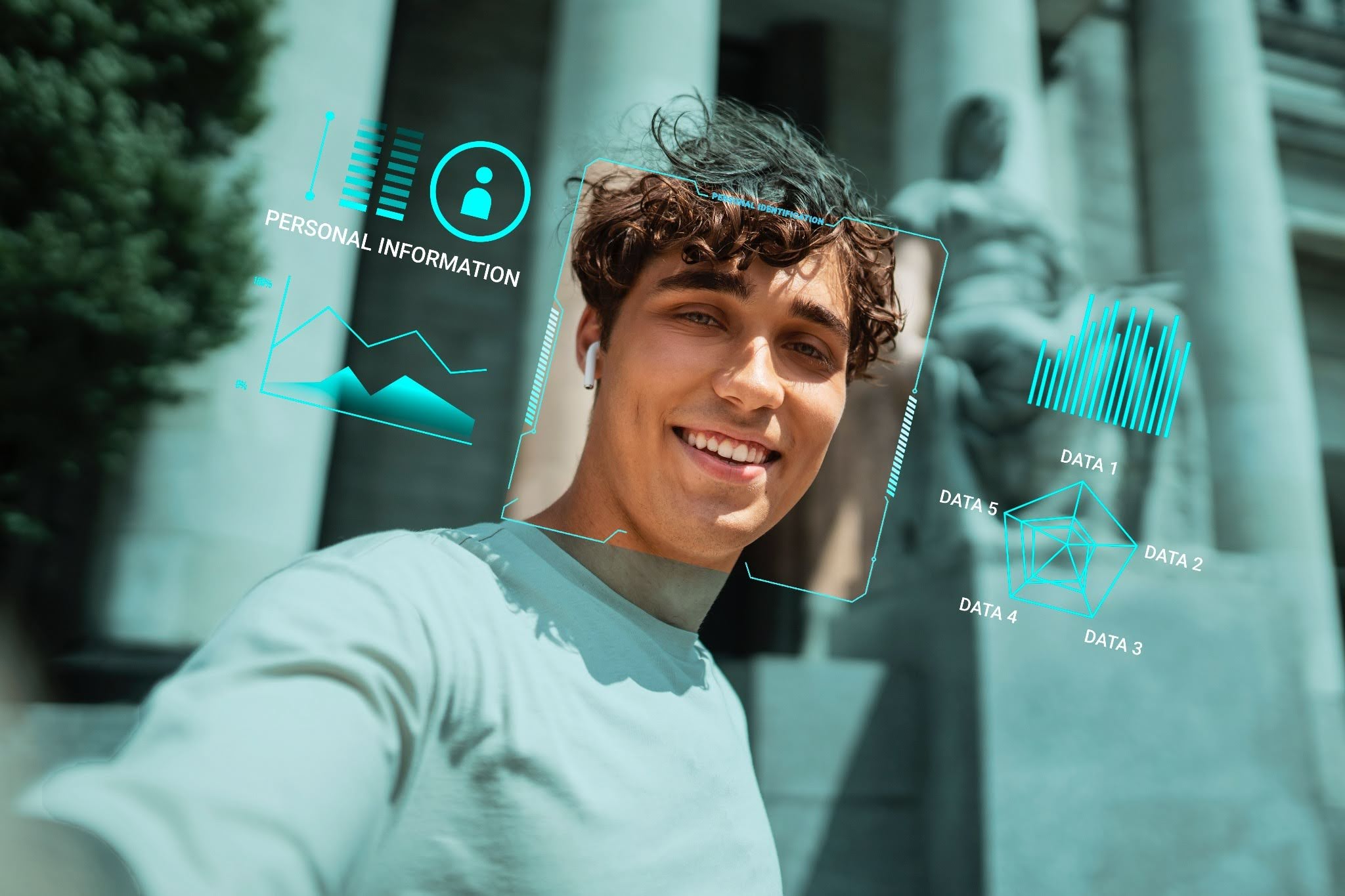
Artificial intelligence is increasingly being applied not to abstract computational problems, but to the analysis of real human subjects—how people look, move, and interact with their environment. Machine learning algorithms are already used to assess posture, recommend clothing based on body shape, analyze consumer behavior, and monitor patients’ physical condition in clinical and applied settings.
Data-driven methods play a central role in these solutions. These approaches enable the transformation of images, video streams, and motion signals into quantifiable features and interpretable metrics. In this article, we examine how artificial intelligence systems analyze human appearance and behavior, which algorithms are most commonly used in practice, and why data quality often has a stronger influence on performance than the choice of a specific model architecture.
What exactly does AI analyze: human appearance and behavior
When artificial intelligence is applied to the analysis of humans, it rarely implies “understanding” in a cognitive or psychological sense. Instead, algorithms operate on observable, measurable, and reproducible characteristics derived from data. For example, body measurement data can provide structured information for training models.
Human appearance typically includes:
- body geometry and anthropometric proportions;
- posture and joint configurations;
- silhouette and volumetric properties;
- movement characteristics in static or quasi-static conditions.
Human behavior represents these same characteristics as temporal processes:
- sequences of movements over time;
- gestures and micro-behavioral patterns;
- responses to external events or digital interfaces;
- recurring activity patterns and routines.
All of these attributes can be represented in numerical form through feature extraction and modeling. At this stage, Data-driven methods become fundamental, as they establish a direct link between visual and temporal data and specific applied tasks—ranging from medical diagnostics and rehabilitation monitoring to consumer behavior analysis and human-centered system design.
Core Data-Driven Methods Used in Human-Centered AI
AI systems that analyze human behavior and appearance rarely rely on a single algorithm. In real-world projects, multiple Data-Driven Methods are combined, each solving a specific type of problem and working with different forms of data. Choosing the right method depends on what you want to learn, how much labeled data you have, and how the system will be used.
Below is a deeper look at the four most important approaches.
1. Supervised Learning: When the Target Is Clearly Defined
Supervised learning is the most widely used method in human-centered AI because many practical tasks come with clear, measurable outcomes.
How It Works in Practice
In supervised learning, each training example includes:
- Input data (images, videos, sensor readings, or numerical features)
- Ground-truth labels (known correct answers)
The model learns to map inputs to outputs by minimizing prediction error across many examples.
Human Appearance Example
A dataset of full-body images paired with:
- height,
- chest circumference,
- waist size,
- hip measurements
can train a model to predict physical dimensions from a single image. Over time, the algorithm learns visual cues related to proportion, posture, and body geometry.
This approach is commonly used in:
- virtual fitting rooms,
- apparel size recommendation systems,
- ergonomic and product design tools.
Common Algorithms and When to Use Them
Linear and Logistic Regression
Best suited for:
- simple, well-understood relationships,
- baseline models and early prototyping.
Example: estimating height from a small set of visual or anthropometric features.
Random Forests
Effective when:
- datasets include mixed feature types,
- interpretability and robustness are important.
Example: classifying body types using both numerical measurements and derived visual features.
Convolutional Neural Networks (CNNs)
The standard choice for image-based human modeling.
CNNs automatically learn hierarchical visual features such as:
- body outlines and contours,
- relative limb proportions,
- symmetry and spatial relationships.
They outperform traditional models whenever raw images are involved.
2. Unsupervised Learning: Discovering Structure Without Labels
Unsupervised learning is used when labeled data is limited or unavailable. Instead of predicting known outputs, the model identifies patterns and structure on its own.
How It Works
The algorithm analyzes similarities and differences within the data to group or compress information without external guidance.
Human-Centered Example
Clustering body shapes to discover natural sizing groups for apparel manufacturing. No predefined labels are needed—the system identifies common patterns automatically.
Common Techniques
K-Means Clustering
Group individuals into clusters based on similarity.
Use case:
- identifying common body shape categories,
- segmenting users based on posture or movement patterns.
Principal Component Analysis (PCA)
Reduces dimensionality while preserving key variation.
Use case:
- understanding which body measurements explain most shape variation,
- visualizing high-dimensional body data.
Autoencoders
Neural networks that learn compact representations of data.
Use case:
- learning latent body shape features,
- anomaly detection in posture or movement data.
3. Self-Supervised and Representation Learning: Learning Without Manual Labels
Self-supervised learning sits between supervised and unsupervised methods. The system creates its own learning signals from the data itself.
Why It Matters
Labeling human-centered data is expensive, slow, and often subjective. Self-supervised methods allow models to learn useful representations without manual annotation.
Example in Human Modeling
A pose estimation system may be trained to:
- predict missing joints in a skeleton,
- reconstruct a body pose from partial input.
By solving these proxy tasks, the model learns a deep understanding of human structure and motion.
Where It’s Used
- pose estimation,
- motion analysis,
- pretraining models before supervised fine-tuning.
Once trained, these representations can be reused across multiple downstream tasks with minimal labeled data.
4. Reinforcement Learning: Modeling Behavior That Adapts Over Time
Reinforcement learning (RL) focuses on decision-making in environments where actions influence future outcomes.
How It Works
An agent:
- takes an action,
- receives feedback (reward or penalty),
- adjusts its behavior to maximize long-term reward.
Human Behavior Example
A fitness application that:
- recommends workouts,
- observes user adherence and performance,
- adapts recommendations over time.
The system learns which strategies lead to better engagement and outcomes for different users.
Typical Use Cases
- adaptive coaching systems,
- personalized health and wellness platforms,
- behavior-aware recommendation engines.
Unlike supervised learning, RL handles situations where behavior evolves in response to the system itself.
Key Takeaway
Each of these Data-Driven Methods plays a distinct role in human-centered AI:
- Supervised learning excels when outcomes are known and measurable.
- Unsupervised learning reveals hidden structure in human data.
- Self-supervised learning reduces dependence on expensive labels.
- Reinforcement learning captures adaptive, time-dependent behavior.
The most effective systems combine these approaches to model both how people look and how they behave in real-world environments.
A Typical Analysis Pipeline

Figure 1. A typical pipeline for human appearance analysis
Practical Applications
Medicine and Sports
Dr. Eric Topol, an American cardiologist and scientist, posits that deep learning can restore care in healthcare in his book Deep Medicine. AI algorithms are increasingly applied in healthcare and sports science to enhance monitoring, diagnosis, and prevention:
- Rehabilitation Monitoring: Patients’ progress during physical therapy can be tracked, looking at how they move, their range of motion, and how well they follow exercises. This allows therapists to adjust programs for faster and safer recovery.
- Analysis of Movement Disorders: Subtle movement issues, like tremors, uneven walking, or motor difficulties, can be identified early. This helps doctors provide timely treatment and plan therapies more effectively.
- Injury Prevention: By observing posture, joint strain, and movement patterns, risky behaviors can be spotted, and corrective exercises can be suggested to prevent injuries in athletes or at work.
Retail and Fashion
In fashion and shopping, these methods make the experience easier and more precise for customers:
- Clothing Size Recommendations: Systems can suggest the best clothing size based on body measurements, photos, or past purchases, making online shopping less of a guess.
- Virtual Fitting Rooms: Customers can try on clothes virtually, seeing how items fit and look in real time without physically changing.
- Reducing Product Returns: By improving size predictions and giving personalized suggestions, fewer items are returned, saving money and improving satisfaction.
Business and Workplace Ergonomics
In offices, factories, or other workplaces, observing movement helps improve comfort and efficiency:
- Workflow Optimization: Studying how people move through a space helps design layouts that save time, reduce unnecessary effort, and make processes smoother.
- Ergonomics and Safety: Repetitive strain, bad posture, or unsafe movements can be spotted, allowing interventions that lower injury risk and improve overall well-being at work.
Limitations and Responsibility
It is important to recognize that algorithms are not neutral. They reflect the characteristics and potential biases of the data on which they are trained.
The main risks include:
- dataset bias;
- privacy and data protection issues;
- misinterpretation of model outputs.
Working with human-centered data requires caution, transparency, and a clear understanding of the limits of model applicability.
Conclusion
AI algorithms have become a powerful tool for analyzing human appearance and behavior. They enable a shift from subjective assessments to measurable indicators and scalable solutions.
At the core of these approaches are Data-driven methods — from data collection and dataset preparation to model deployment in real-world products. Understanding these principles is essential not only for ML engineers but also for businesses that work with real users.
The higher the data quality and the clearer the problem formulation, the more reliable and useful the resulting system becomes.

Raghav Sharma is a content writer and media researcher at Newsdata.io, specializing in news industry analysis, media literacy, and the evolving landscape of digital journalism. With a background in English Literature and Journalism, along with a focus on fact-based reporting standards, Raghav covers topics including news API technology, editorial bias evaluation, and responsible information consumption. Raghav’s work has covered media trends across categories, including healthcare news, international journalism, and API-driven publishing. You can connect with him on LinkedIn or explore more of his writing on the Newsdata.io blog.